How to Save Money on Roof Replacement in Chicago
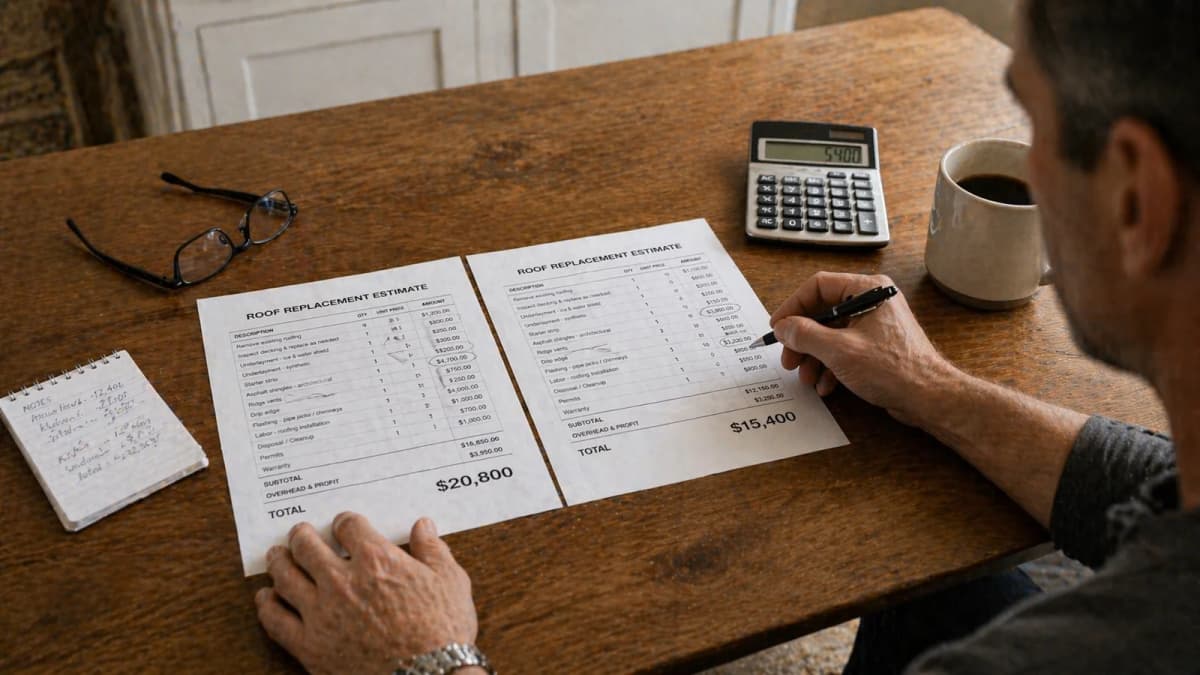
Saving money on a Chicago roof replacement comes from three proven tactics: choosing Class 4 impact-resistant shingles that trigger 10 to 35 percent homeowner insurance discounts, scheduling in the late fall off-season for 5 to 15 percent contractor pricing, and avoiding the most common rip-off, which is not getting at least three itemized estimates. For low-income homeowners, the Illinois Housing Development Authority (IHDA) Home Repair and Accessibility Program offers up to $21,500 in forgivable grant funding for roof-only projects, subject to income eligibility and local grantee availability.
Bottom line: three actions protect the most money: (1) get at least three itemized estimates before signing, (2) check IHDA HRAP and local Cook County grants if your household income is below 80 percent of Area Median Income, (3) upgrade to Class 4 shingles if your insurer gives an impact-resistant discount in Illinois.
- Three itemized estimates save 10 to 20 percent on average Chicago replacement cost through price comparison alone, before any other tactic.
- Late fall scheduling (October to mid-November) typically drops pricing 5 to 15 percent compared to peak spring and summer booking windows.
- Class 4 impact-resistant shingles qualify for 10 to 35 percent homeowner insurance discounts in Illinois. Upgrade cost is $1,500 to $3,000 on a typical 2,000 sq ft home.
- IHDA HRAP Roof Only option: up to $21,500 in forgivable loan funding for low-income Chicago homeowners under 80 percent AMI. Administered through local grantees, not directly by IHDA.
- IHDA HRAP Full Rehab option: up to $45,000 to $50,000 for broader home repairs including roof, foundation, and accessibility improvements.
- Cook County CDBG programs may offer up to $60,000 for comprehensive repairs in targeted Chicago neighborhoods. Availability varies by year and community funding cycle.
- Architectural shingles cost about $2 to $3 more per sq ft than 3-tab but last 5 to 10 years longer, making them the more economical choice over time in Chicago.
- Avoid deductible waiver offers. Illinois law 815 ILCS 513/18 makes this illegal. Contractors offering it are almost always unlicensed or planning to inflate the insurance claim.
What is the cheapest time of year to replace a roof in Chicago?
Late November through February is the slowest season for Chicago roofing contractors, and homeowners who schedule during this window often negotiate 10–15% off standard rates. Demand drops sharply after the fall rush, which means contractors are more willing to lock in work at lower margins. Reputable companies use cold-weather adhesives and follow manufacturer guidelines for low-temperature installation, so the result is not inferior. Avoid scheduling immediately after a major hailstorm: post-storm demand spikes drive prices up and lead times out by weeks.
Can homeowner insurance cover roof replacement in Chicago?
Yes, if your roof was damaged by a covered event such as hail, wind, or storm debris, your homeowner insurance policy may pay for a full replacement minus your deductible. See our step-by-step storm damage guide for how to document and file correctly. A legitimate contractor will never ask you to sign over your insurance benefits or waive your deductible — both practices are illegal under Illinois law (815 ILCS 513/18).
Does getting multiple estimates actually save money in Chicago?
For a typical Chicago single-family home, getting two or three estimates can reveal price differences of $2,000 to $4,000 for identical scope of work. The variation reflects differences in overhead, crew size, material suppliers, and how busy a company is at the time of bidding. Free on-site estimates are standard in the Chicago market, so request at least two before committing. See our guide on how to choose a contractor for what else to check before signing.
Is asphalt shingle the most cost-effective roofing material for Chicago homes?
For most Chicago homeowners, architectural asphalt shingles offer the best balance of cost, durability, and performance in Chicago's climate. See our full roofing materials guide for a detailed comparison. A full replacement runs $19,000–$26,000 for a standard 2,000 sq ft single-family home, roughly half the cost of metal roofing and a third of slate. Modern architectural shingles are rated for Chicago's freeze-thaw cycles and come with 30-year manufacturer warranties. Metal roofing lasts longer (40–70 years) and can be the right choice if you plan to stay in your home long term, but the payback period is 15–20 years. For flat roofs common on Chicago two-flats and three-flats, TPO membrane at $14,000–$22,000 is the city-preferred standard.
Are there city or state assistance programs for Chicago homeowners replacing a roof?
Yes, several programs exist that many homeowners overlook. The Illinois Housing Development Authority (IHDA) offers up to $50,000 in home repair assistance to qualifying homeowners through its Home Repair and Accessibility Program (HRAP). The federal Section 504 Home Repair program provides low-interest loans (1% fixed rate, up to 20-year terms) and grants for homeowners over 62 who meet income limits. The City of Chicago's Community Development Block Grant program funds emergency home repairs including roofing for income-qualified residents. Contact the Chicago Department of Housing directly or call 311 to determine which programs you qualify for before financing a replacement out of pocket.
Can scheduling my roof replacement alongside a neighbor save money in Chicago?
Coordinating a roof replacement with one or two neighbors on the same block can lower individual costs by $500–$1,500 per home. Contractors save on mobilization, equipment transport, and crew scheduling when multiple roofs are done back-to-back in the same area, and many will pass part of those savings on to secure the combined work. This is especially practical in Chicago's dense neighborhoods like Logan Square, Pilsen, Bridgeport, and Wicker Park, where homes are built close together and crews can move efficiently between addresses. Bring up the possibility when requesting your estimate — most contractors are open to it.
What maintenance mistakes cost Chicago homeowners the most at replacement time?
The most expensive mistake is waiting too long. A roof with active leaks that go unaddressed for one to two seasons often causes rotted decking that must be replaced before new shingles go on, adding $500–$2,000 to the project. Clogged gutters are the second most common issue: Chicago's freeze-thaw cycles force ice behind shingles when drainage is blocked, accelerating damage. Annual gutter cleaning and a professional inspection every three to five years cost a fraction of the damage they prevent. Minor repairs like replacing a few missing shingles or resealing flashing around a chimney typically run $200–$600 and can extend a roof's life by several years.
How do I verify a Chicago roofing contractor is not overcharging?
Request an itemized written estimate that breaks out labor, materials, tear-off and disposal, permit fees, and warranty terms separately. The City of Chicago requires a building permit for full roof replacement — if a contractor does not include permit costs or suggests skipping the permit to save money, that is a serious red flag that will create problems at resale. Material cost can be verified independently: asphalt shingles wholesale in the Chicago area run $80–$120 per square (100 sq ft). A typical home uses roughly 20–25 squares including waste. Labor typically accounts for 55–65% of total project cost in the Chicago metro. Verify licensing, insurance, and rating yourself before comparing quotes, so you start from a checked baseline.
Frequently asked questions
How much can I save by getting multiple Chicago roofing estimates?
Three itemized estimates from IDFPR-licensed contractors typically reveal price differences of $2,000 to $6,000 on identical scope of work in Chicago. Request each estimate with materials by brand and grade, labor, permit, and warranty listed separately. The price comparison alone saves most homeowners 10 to 20 percent off the highest bid received.
Is it cheaper to replace a roof in winter in Chicago?
Winter installation is not typically cheaper in Chicago and is often more expensive. Asphalt shingles need surface temperatures above about 40°F to seal properly. Late fall (October to mid-November) offers the best balance of contractor availability and scheduling discounts of 5 to 15 percent. Spring and summer are peak season with full pricing.
What are Class 4 impact-resistant shingles and how do they save money?
Class 4 impact-resistant shingles are rated under the UL 2218 standard to withstand a 2-inch steel ball dropped from 20 feet without cracking. In Illinois, insurance carriers including State Farm and USAA offer 10 to 35 percent annual premium discounts for Class 4 installations. The upgrade costs about $1,500 to $3,000 over standard architectural shingles.
What is IHDA HRAP and can I use it for a roof in Chicago?
The Illinois Housing Development Authority Home Repair and Accessibility Program (HRAP) offers a Roof Only option up to $21,500 for eligible Chicago homeowners, structured as a 3-year forgivable loan. The Full Rehab option reaches $45,000 to $50,000 over 5 years for broader home repairs. Applications go through local grantee agencies, not IHDA directly.
Who qualifies for Illinois home repair assistance programs?
IHDA HRAP requires household income at or below 80 percent of Area Median Income (AMI). You must own and occupy the home as primary residence. Mobile homes permanently affixed with land ownership also qualify. Cook County and the City of Chicago administer additional programs with their own eligibility rules and waiting lists. Funding is limited each year.
Are there federal tax credits for roof replacement in 2026?
The federal Energy Efficient Home Improvement Credit covers select roofing-related improvements like qualifying insulation and Energy Star cool roofs, up to $1,200 per year for most components. Standard asphalt shingle replacement does not typically qualify on its own. Check IRS Form 5695 for current-year eligibility and consult a qualified tax professional for your specific situation.
How do I verify a Chicago contractor is not overcharging?
Request itemized estimates that separate labor, materials by brand and grade, tear-off and disposal, permit fees, and warranty terms. In Chicago, materials typically account for 35 to 45 percent of total cost and labor 55 to 65 percent. Estimates 20 percent or more above the median of three usually signal overcharging or scope padding to pad the final invoice.
What maintenance mistakes cost Chicago homeowners the most?
The costliest maintenance mistakes in Chicago are: neglecting gutter cleaning (leads to ice dams), ignoring minor leaks (leads to decking rot at $80 to $120 per sheet), skipping attic ventilation checks (leads to premature shingle aging), and delaying tree trimming near the roof (leads to impact damage during storms). Small annual maintenance prevents large replacement-time surprises.
Is financing worth it for a Chicago roof replacement?
Financing a Chicago roof replacement is worthwhile when interest cost stays below the avoided cost of ongoing damage. Home equity loans often offer the lowest rates and may be tax-deductible if used for home improvement purposes. Credit cards are the most expensive option. IHDA HRAP forgivable loans beat all standard financing when you qualify. Always calculate total interest plus principal before committing.
What to do next
Start by pulling three written itemized estimates from IDFPR-licensed contractors and comparing them line by line. If your household income is below 80 percent of Area Median Income in Cook County, apply to IHDA HRAP through your local grantee agency (search at ihda.org). Ask your insurer about Class 4 shingle discounts before selecting materials. See our average cost guide to benchmark pricing, and how to choose a contractor for the full verification checklist.
Have questions about roof replacement in Chicago?
CALL NOW (844) 578-0719Free consultation. No obligation.Guides for homeowners
How to Choose a Roof Replacement Contractor in ChicagoAverage Cost of Roof Replacement in Chicago in 2026Signs Your Roof Needs Replacement in ChicagoStorm Damage Roofing Chicago Roof Repair and Replacement After StormHow to Check a Roof Replacement Contractor in ChicagoHow to Save Money on Roof Replacement in ChicagoRoof Repair or Full Replacement After Storm Damage in Chicago?Best Roofing Materials for Chicago: What Survives the Cold, Ice, and WindRoofing Materials Comparison for Chicago Homes: Cost, Lifespan, and Performance in 2026Ice Dams on Chicago Roofs: Causes, Damage, Prevention, and When to Replace