Roofing Materials Comparison for Chicago Homes: Cost, Lifespan, and Performance in 2026
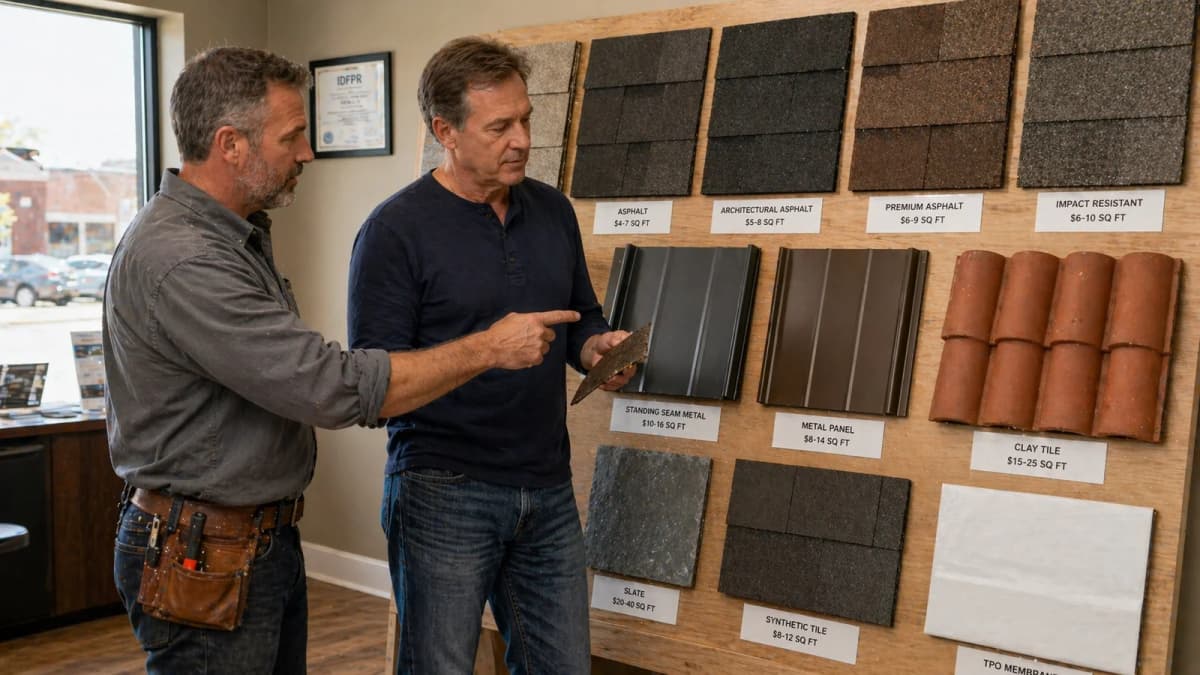
Roofing materials for Chicago homes in 2026 fall into three tiers by cost and lifespan: entry-level 3-tab asphalt ($10,000 to $22,000, 15 to 20 years), mid-tier architectural asphalt and basic metal shingles ($19,000 to $36,000, 20 to 40 years), and premium standing seam metal, synthetic composite, and natural slate ($30,000 to $80,000+, 40 to 150 years). The right choice depends on home type, ownership horizon, and whether the roof is pitched or flat. This guide compares every common Chicago option side by side with real Illinois performance data rather than manufacturer marketing.
Bottom line: for 80 percent of Chicago homeowners, Class 4 architectural asphalt hits the best balance of cost, lifespan, and insurance benefit. Flat roofs on two-flats should use TPO unless budget forces EPDM. Premium materials (metal, synthetic, slate) are worth it only for long-term owners or specific architectural needs.
- 3-tab asphalt: $10,000 to $22,000 total, 15 to 20 years, $7.50 to $10.00 per sq ft installed. Entry-level but short Chicago lifespan.
- Architectural asphalt: $19,000 to $26,000 total, 20 to 30 years, $9.50 to $13.00 per sq ft installed. The Chicago volume leader for good reason.
- Class 4 impact-resistant asphalt: $12.00 to $16.00 per sq ft installed, earns 10 to 35 percent insurance discount in Illinois. Best for hail-prone Chicago.
- Standing seam metal: $30,000 to $44,000 total, 40 to 70 years, $15.00 to $22.00 per sq ft installed. Sheds snow naturally, highest long-term value.
- TPO flat roof: $14,000 to $22,000 for a typical two-flat, 25 to 35 years, heat-welded seams, white reflective surface, Chicago code-preferred.
- EPDM flat roof: $10,000 to $22,000, 20 to 30 years, taped or glued seams, black heat-absorbing surface, lower cost but shorter lifespan.
- Synthetic composite: $9 to $15 per sq ft installed, 40 to 50 years, Class 4 and Class A built in, cedar or slate appearance without maintenance.
- Natural slate: $10 to $30 per sq ft installed, 75 to 150 years, 7 to 10 lbs per sq ft (may need structural reinforcement on older Chicago homes).
Pitched roof vs flat roof: which materials work for Chicago homes?
Chicago has two distinct housing types that require different roofing systems. Single-family bungalows, greystones, and frame houses have pitched roofs and use asphalt shingles or metal roofing. Two-flats, three-flats, courtyard buildings, and commercial properties have flat or low-slope roofs requiring membrane systems — TPO or EPDM. Using the wrong system for your roof type is one of the most expensive mistakes a Chicago homeowner can make.
What is the real lifespan of roofing materials in Illinois?
Manufacturers rate shingles for 25–30 years, but Chicago climate delivers different results. Architectural asphalt shingles in Illinois typically last 18–22 years — freeze-thaw cycles force water into micro-cracks, ice expands and destroys the granule bond over time. Metal roofing (standing seam) routinely reaches 50+ years because it does not absorb moisture. TPO flat roofs last 20–25 years with properly heat-welded seams. EPDM rubber membranes last 25–30 years — rubber stretches and contracts up to 300% without damage, making it exceptionally suited to Chicago temperature extremes. Budget for asphalt replacement every 18–22 years, not 30. See our repair vs replace guide to understand when that replacement threshold has been reached.
Roofing materials comparison table for Chicago 2026
Architectural Asphalt Shingles: $950–$1,300 per square (100 sq ft) | Real Illinois lifespan: 18–22 years | Pitched roofs | Freeze-thaw: medium — micro-cracks degrade granules | Snow: holds snow, snow guards recommended | Energy: low | Main Chicago risk: wind uplift from Lake Michigan. Metal Standing Seam: $1,500–$2,200+ per square | 50+ years | Pitched roofs | Freeze-thaw: excellent — no moisture absorption | Snow: sheds rapidly (safety note for sidewalks) | Energy: high, reflects solar | Main risk: high upfront cost. TPO Flat Membrane: $1,000–$2,500 per square | 20–25 years | Flat roofs | Freeze-thaw: good — welded seams hold tight | Snow: white surface accelerates melting | Energy: maximum — reduces AC costs 20–30% | Main risk: seam weld errors. EPDM Rubber: $1,000–$2,200 per square | 25–30 years | Flat roofs | Freeze-thaw: excellent — stretches without damage | Snow: black surface absorbs heat, aids melting | Energy: low in summer, positive in winter | Main risk: adhesive seam separation over time. All prices installed, including labor, materials, permit, and disposal. See our full cost guide for detailed breakdowns by home size and roof type.
How does Chicago weather affect each roofing material differently?
Chicago combines Polar Vortex cold, Lake Michigan wind and humidity, summer heat above 90F, and hailstorms — unique demands on each material. Asphalt shingles face greatest threat from wind uplift in lakeside neighborhoods — Edgewater, Rogers Park, Lincoln Park — where gusts regularly exceed 60 mph. Choose shingles rated for 110–130 mph wind resistance in these areas. Metal roofing handles all Chicago conditions well but sheds snow rapidly — a safety consideration for sidewalks. TPO is vulnerable to seam failures if hot-air welding is rushed or done in cold conditions. EPDM adhesive seams can separate at penetrations and edges over time — mechanical fastening at perimeters is essential.
Why is attic ventilation critical for any roofing material in Chicago?
Chicago high humidity makes attic ventilation as important as the roofing material itself. Without proper ridge vents running the full length of the ridge combined with soffit intake vents, moisture from inside the home condenses in the attic year-round. This condensation saturates insulation, rots roof decking, and can destroy an asphalt shingle roof from the inside in 8–12 years regardless of shingle quality. A properly ventilated attic also maintains temperatures close to outdoor ambient, preventing ice dam formation in winter. Always verify that your contractor inspects and addresses attic ventilation when replacing your roof.
How much Ice and Water Shield does a Chicago roof need?
Ice and Water Shield underlayment is required by Chicago Building Code for all roof replacements. The minimum effective installation in Chicago is at least two rows — approximately 6 feet from the roof edge — placing protection 24 inches past the interior wall line where ice dams form. Without this coverage, meltwater from ice dams infiltrates under any roofing material. Some Illinois insurers deny ice dam claims if Ice and Water Shield was not properly installed. Your roofing contract must list it as a line item with coverage depth specified.
Are Class 4 impact-resistant shingles worth the extra cost in Chicago and suburbs?
Class 4 impact-resistant shingles cost 10–20% more but carry two advantages in the Chicago metro area. First, they withstand hail impact better — relevant across Chicago and suburbs including Naperville, Aurora, and Joliet where hail causes significant damage from May through August. Second, many Illinois homeowner policies offer premium discounts of 20–25% for Class 4 certified roofs. Ask your agent before replacement — the upgrade typically pays back in 5–7 years through reduced premiums alone. See our save money guide for more ways to reduce the total cost of roof replacement.
Why is TPO the standard for flat roofs on Chicago two-flats?
TPO has become the industry standard for new flat roof installations on Chicago two-flats and three-flats for two reasons. First, its white membrane reduces the urban heat island effect — dense Chicago neighborhoods trap heat, and a white reflective roof cuts interior cooling costs by 20–30% in summer compared to black EPDM. Second, heat-welded seams create a fully monolithic membrane with no adhesive to separate over time. For buildings in Lincoln Square, Logan Square, or Pilsen where HVAC efficiency matters and roof access for maintenance is limited, TPO performance advantages are particularly relevant. See our how to choose a contractor guide before selecting a company for your flat roof replacement.
Frequently asked questions
Which roofing material lasts longest in Chicago?
Natural slate lasts longest at 75 to 150 years, but weighs 7 to 10 pounds per square foot and requires structural assessment on most Chicago homes. For practical longevity without structural concerns, standing seam metal (40 to 70 years) and synthetic composite (40 to 50 years) lead the field. Architectural asphalt reaches 20 to 30 years, shorter than mild-climate performance due to Chicago freeze-thaw and hail exposure.
What is the cheapest roofing material for a Chicago home?
3-tab asphalt shingles are the cheapest option at $10,000 to $22,000 for a typical single-family home, or $7.50 to $10.00 per sq ft installed. The tradeoff is shorter lifespan (15 to 20 years in Chicago), weaker wind rating (typically 60 to 70 mph), and lower resale appeal. Architectural asphalt at slightly higher cost is usually the better value over time.
Which roofing material is best for Chicago flat roofs?
TPO membrane is the preferred flat roof standard in Chicago at $14,000 to $22,000 for a typical two-flat, with 25 to 35 year lifespan and heat-welded watertight seams. EPDM at $10,000 to $22,000 is a lower-cost alternative with 20 to 30 year lifespan but weaker seam reliability. Modified bitumen at $10,000 to $20,000 is a durable multi-layer option common on older Chicago buildings.
How do I compare per sq ft roofing costs in Chicago?
Per sq ft installed Chicago pricing in 2026: 3-tab asphalt $7.50 to $10.00; architectural asphalt $9.50 to $13.00; Class 4 impact shingles $12.00 to $16.00; standing seam metal $15.00 to $22.00; synthetic composite $9 to $15; natural slate $10 to $30. A roofing square equals 100 sq ft and is the standard industry unit for estimates and quotes.
Does metal roofing really save on Chicago energy bills?
Metal roofing with reflective coating can reduce summer cooling costs by 10 to 25 percent compared to dark asphalt. In Chicago's climate with hot humid summers and cold winters, the summer savings are meaningful but the winter heating impact is minimal since the roof is snow-covered much of the season. Expect $100 to $400 in annual energy savings depending on home size and insulation.
Which roofing materials earn Illinois insurance discounts?
UL 2218 Class 4 impact-resistant asphalt shingles earn 10 to 35 percent premium discounts from major Illinois carriers including State Farm and USAA. Synthetic composite products (DaVinci, Brava) typically also qualify because they meet Class 4. Metal roofing often qualifies for wind mitigation discounts separately. Confirm eligibility with your specific insurer before installation as discounts vary by carrier and policy.
How much Ice and Water Shield should a Chicago roof have?
Chicago Building Code follows IRC R905.1.2, requiring Ice and Water Shield at all eaves extending at least 24 inches past the warm-side wall line. On a typical 1-foot overhang, that means a 3-foot strip along the eave. Best practice in Chicago also includes full coverage in all valleys (36-inch strip centered in the valley) and around all roof penetrations like chimneys and skylights.
What wind rating do Chicago roofs need?
Chicago experiences 60 mph average storm gusts with peaks of 80 to 100 mph in severe events. Shingle products should be rated to at least 110 mph per ASTM D7158 Class H, with 130 mph preferred for exposed or high-rise locations. Standing seam metal typically meets or exceeds 140 mph ratings when properly fastened to the deck with manufacturer-specified clips.
Should Chicago homeowners choose cedar shake or synthetic alternatives?
Synthetic shake products from DaVinci, Brava, and CertainTeed Belmont typically beat natural cedar in Chicago. Real cedar lasts only 15 to 25 years here due to humidity and freeze-thaw cycling, requires annual maintenance, and has no manufacturer warranty. Synthetic composite lasts 40 to 50 years with zero maintenance at similar or slightly higher upfront cost, with better insurance ratings built in.
Why is attic ventilation critical for Chicago roofing?
Proper attic ventilation prevents premature shingle aging (heat buildup cooks asphalt from below) and ice dam formation (warm attic air melts roof snow that then refreezes at cold eaves). Chicago code typically requires 1 sq ft of net free ventilation per 150 sq ft of attic floor area, balanced between soffit intake and ridge exhaust. Inadequate ventilation voids most manufacturer shingle warranties.
What to do next
Start by identifying whether you need a pitched or flat roof solution, then use the per sq ft pricing above to calculate your rough budget. For pitched roofs, Class 4 architectural asphalt is the default starting point unless your ownership horizon exceeds 20 years (then compare metal and synthetic). For flat roofs on two-flats, TPO should be your baseline with EPDM as a cost-reduction option. See our best materials guide for detailed recommendations and average cost article for total project budgets.
Have questions about roof replacement in Chicago?
CALL NOW (844) 578-0719Free consultation. No obligation.Guides for homeowners
How to Choose a Roof Replacement Contractor in ChicagoAverage Cost of Roof Replacement in Chicago in 2026Signs Your Roof Needs Replacement in ChicagoStorm Damage Roofing Chicago Roof Repair and Replacement After StormHow to Check a Roof Replacement Contractor in ChicagoHow to Save Money on Roof Replacement in ChicagoRoof Repair or Full Replacement After Storm Damage in Chicago?Best Roofing Materials for Chicago: What Survives the Cold, Ice, and WindRoofing Materials Comparison for Chicago Homes: Cost, Lifespan, and Performance in 2026Ice Dams on Chicago Roofs: Causes, Damage, Prevention, and When to Replace