How to Choose a Roof Replacement Contractor in Chicago
Choosing a roof replacement contractor in Chicago comes down to three verifiable credentials: an active Illinois IDFPR roofing license, a written workmanship warranty of at least 5 years, and a Google rating of 4.5 stars or higher with at least 50 reviews. Red flags that cost Chicago homeowners thousands include requesting full payment upfront, offering to waive the insurance deductible (illegal under Illinois law 815 ILCS 513/18), and going door-to-door after storms without a verifiable local business address.
Bottom line: verify the IDFPR license number at idfpr.illinois.gov, demand a written 5-year workmanship warranty in the contract, and insist on a City of Chicago building permit pulled by the contractor. Any estimate that skips these three steps should be walked away from.
- Illinois IDFPR license required by law. The Illinois Roofing Industry Licensing Act (225 ILCS 335) makes it illegal to perform roofing work in Illinois without a state license. Verify at idfpr.illinois.gov before signing.
- Two license types are issued by IDFPR: Limited (residential up to 8 units) and Unlimited (all building types including commercial). Both are valid for single-family Chicago roof replacement.
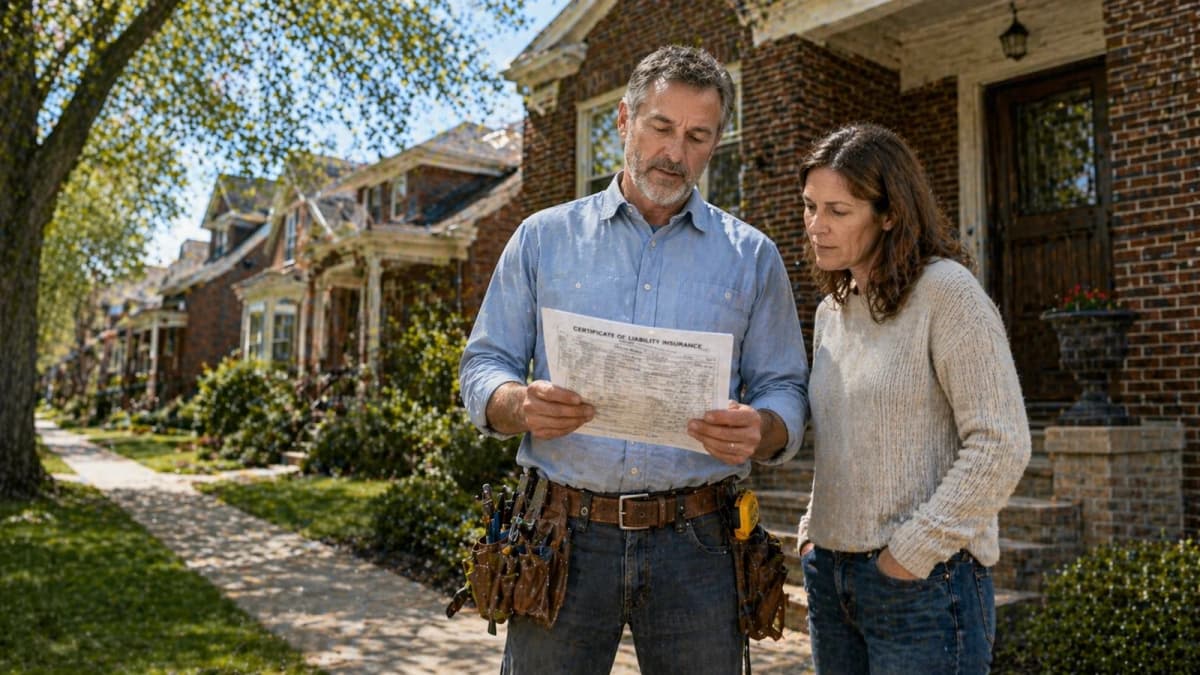
- General Liability insurance of $250,000 minimum and active Workers Compensation coverage are standard for Chicago roofing contractors. Ask for a Certificate of Insurance naming you as additional insured.
- Written workmanship warranty of at least 5 years is the Chicago industry baseline; 10 years signals high installer confidence. Verbal warranties are not enforceable.
- Chicago building permit is required for full roof replacements. The contractor pulls it through the Express Permit Program for $165 to $550 depending on project valuation.
- A 4.5+ star Google rating with 50 or more reviews is the reliability baseline. Review volume matters more than a perfect score: a 4.9 with 11 reviews is statistically weaker than a 4.6 with 180.
- Waiving the insurance deductible is illegal in Illinois under 815 ILCS 513/18 (Home Repair and Remodeling Act). Any contractor offering to do this is a clear fraud warning.
- Out-of-state storm chasers are a recurring Chicago problem after hail events. Verify local business address, IDFPR license, and years of Chicago market presence before signing any post-storm contract.
What license does a roofing contractor need in Chicago?
Every roofing contractor working in Chicago must hold an active Illinois IDFPR roofing license. Illinois issues two types: Limited (residential buildings up to 8 units) and Unlimited (all building types including commercial). Verify the license number at idfpr.com before signing any contract (Illinois Roofing Industry Licensing Act, 225 ILCS 335). Working with an unlicensed contractor voids your ability to file an insurance workmanship claim and exposes you to code violations that appear at resale.
How many Google reviews should a Chicago roofing contractor have?
We recommend a minimum 4.5-star Google rating with at least 50 reviews as a baseline when evaluating any Chicago roofing contractor. Volume matters more than a perfect score — a 4.9 with 11 reviews is far less reliable than a 4.6 with 180 reviews. Read the text of the 10 most recent reviews and look for recurring patterns: slow follow-up, poor cleanup, and warranty disputes are the most common complaints against unreliable contractors in the Chicago market.
How many estimates should I get for roof replacement in Chicago?
Get at least two written, itemized estimates before committing to any Chicago roofing contractor. Price differences of $2,000–$4,000 for identical scope of work are common in the Chicago market. Any estimate more than 20% below the others typically signals substandard materials, unlicensed labor, or a contractor who will request additional payment mid-project. Reputable Chicago roofers offer free on-site estimates, so there is no reason to settle for one number. See average replacement costs to understand what a fair price looks like before you call.
What warranty should a Chicago roofing contractor provide?
A reputable Chicago roofing contractor provides a minimum 5-year workmanship warranty in writing, separate from the manufacturer's material warranty. The workmanship warranty covers installation defects — leaks caused by improper flashing, failed seams, or incorrect fastening. Ten years is the mark of high installer confidence. Never accept a verbal warranty. Demand the warranty terms appear in the written contract before signing, and confirm the company has been in business long enough to actually honor it.
What are the red flags of a bad roofing contractor in Chicago?
The most reliable red flags are: requesting full payment upfront, going door-to-door after storms, refusing to provide a written estimate, not pulling a City of Chicago building permit, and offering to waive your insurance deductible — which is illegal under Illinois law (815 ILCS 513/18). Out-of-state license plates on work trucks and no verifiable Chicagoland business address are also warning signs. After any major storm, unlicensed out-of-state contractors flood Chicago neighborhoods — verify every contractor at idfpr.com before signing. See our repair vs replace guide before committing to any scope of work.
How do I compare roofing estimates in Chicago to avoid overpaying?
Request itemized estimates that break out labor, materials (listed by brand and grade), tear-off and disposal, City of Chicago permit fees, and warranty terms separately. In Chicago, materials typically account for 35–45% of total project cost and labor 55–65%. A contractor who cannot provide a line-item breakdown is one to avoid — legitimate companies have no reason to hide their cost structure. Verify licensing, insurance, and rating yourself before you sign — see how to check a contractor for the full checklist.
Frequently asked questions
How do I verify an Illinois roofing contractor license?
Search the contractor's name or license number at idfpr.illinois.gov, the official Illinois Department of Financial and Professional Regulation website. Confirm the license is active and check for disciplinary actions before signing. Unlicensed roofing work violates Illinois law (225 ILCS 335) and exposes the homeowner to workmanship claim issues.
What insurance should a Chicago roofing contractor carry?
At minimum: General Liability coverage of $250,000 and active Workers Compensation insurance. Request a Certificate of Insurance directly from the contractor's insurer, and confirm the policy is active as of your project start date. Premium contractors often carry $1 million in General Liability for larger residential and commercial projects.
How many Google reviews should a Chicago roofing contractor have?
At least 50 reviews with a 4.5-star average or higher. Read the text of the 10 most recent reviews for recurring complaints: slow follow-up, poor cleanup, warranty disputes. Review quantity indicates genuine experience; a perfect 5.0 with 8 reviews is statistically weaker than a 4.6 with 180.
What warranty should a Chicago roofing contractor provide?
A written workmanship warranty of at least 5 years, separate from the manufacturer's material warranty. The workmanship warranty covers installation defects such as improper flashing, failed seams, or poor fastening. Ten years of workmanship coverage indicates high installer confidence and strong company stability over time.
What are the main red flags when choosing a Chicago roofer?
Requesting full payment upfront, refusing to provide a written estimate, not pulling a City of Chicago building permit, going door-to-door after storms, and offering to waive the insurance deductible (illegal under 815 ILCS 513/18). Out-of-state license plates on work trucks and no verifiable Chicagoland address are additional warning signs.
Is it legal for a Chicago roofer to waive my insurance deductible?
No. Illinois law 815 ILCS 513/18 (Home Repair and Remodeling Act) prohibits any home repair contractor from advertising, promising, or offering to pay, rebate, or discount any portion of an insurance deductible as inducement for the sale of goods or services. Any contractor offering this should be reported to IDFPR.
Should my contractor pull the Chicago roof replacement permit?
Yes. A licensed Chicago roofing contractor pulls the permit through the Express Permit Program as part of the project scope. If the contractor asks you to pull the permit yourself, that is a warning sign because it shifts code compliance liability from the contractor to the homeowner.
How do I compare roofing estimates in Chicago?
Request itemized estimates that separate labor, materials (listed by brand and grade), tear-off and disposal, permit fees, and warranty terms. In Chicago, materials typically account for 35 to 45 percent of total project cost and labor 55 to 65 percent. Any contractor who cannot provide a line-item breakdown should be avoided.
What should a Chicago roof replacement contract include?
Full contractor name, IDFPR license number, Chicago business address, General Liability insurance details, itemized scope of work, materials by brand and grade, start and completion dates, payment schedule (typically 10 to 30 percent upfront), written workmanship warranty, and grounds for termination. Verbal promises not written into the contract are not enforceable.
How do I avoid storm chaser scams in Chicago?
After a Chicago hailstorm, confirm any contractor at your door has: (1) an IDFPR license you verify on the spot at idfpr.illinois.gov; (2) a local Chicago business address, not a P.O. box or out-of-state address; (3) at least 3 years of continuous Chicago market presence. Never sign an Assignment of Benefits form with a contractor you have just met.
What to do next
Before any contractor steps on your property, verify their IDFPR license at idfpr.illinois.gov and request a Certificate of Insurance directly from their insurer. Request three itemized written estimates and compare them line by line using the key facts above. See our questions to ask a roofing contractor page for the full interview list, and how to check a contractor for the exact criteria to apply to any company you consider.
Have questions about roof replacement in Chicago?
CALL NOW (844) 578-0719Free consultation. No obligation.Guides for homeowners
How to Choose a Roof Replacement Contractor in ChicagoAverage Cost of Roof Replacement in Chicago in 2026Signs Your Roof Needs Replacement in ChicagoStorm Damage Roofing Chicago Roof Repair and Replacement After StormHow to Check a Roof Replacement Contractor in ChicagoHow to Save Money on Roof Replacement in ChicagoRoof Repair or Full Replacement After Storm Damage in Chicago?Best Roofing Materials for Chicago: What Survives the Cold, Ice, and WindRoofing Materials Comparison for Chicago Homes: Cost, Lifespan, and Performance in 2026Ice Dams on Chicago Roofs: Causes, Damage, Prevention, and When to Replace