Storm Damage Roofing Chicago Roof Repair and Replacement After Storm
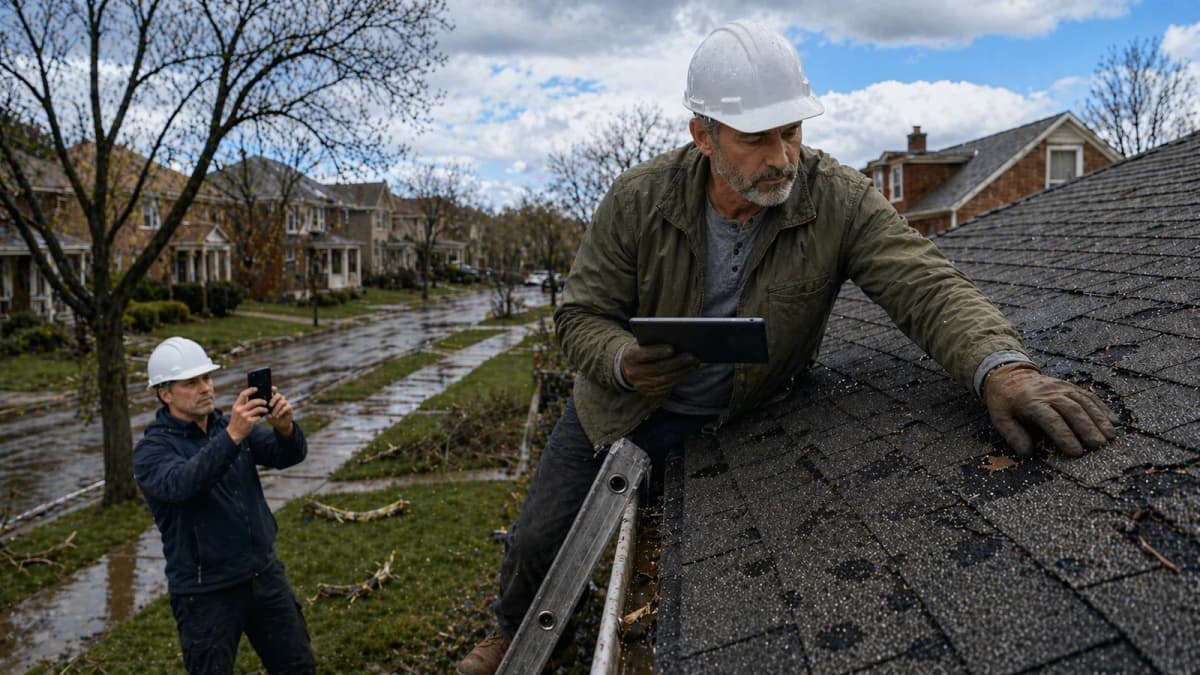
Roof storm damage claims in Chicago are won or lost in the first 48 hours. Document all damage with dated photos immediately, get a licensed Illinois roofing contractor's written assessment, and understand whether your policy pays Replacement Cost Value (RCV) or Actual Cash Value (ACV) before you talk to an adjuster. The difference between the two can be $10,000 or more on a typical Chicago roof replacement, and many Illinois insurers now automatically switch roofs older than 10 to 15 years to ACV without clear warning to the homeowner.
Bottom line: check your policy declarations page today for the letters RCV or ACV next to your roof coverage. If you cannot find it, call your agent and ask directly. Knowing this single fact before damage occurs can save you $10,000 or more on a Chicago roof claim.
- 48-hour documentation window is critical. Dated photos with phone metadata help establish when damage occurred and link it to a specific storm event.
- RCV vs ACV is the biggest payout variable. RCV pays current replacement cost minus deductible; ACV subtracts depreciation first and can reduce payout by 40 to 70 percent on older roofs.
- Percentage-based deductibles of 1 to 2 percent of insured value are replacing flat deductibles in Illinois. On a $300,000 home, that is $3,000 to $6,000 before insurance pays anything.
- Roofs older than 10 to 15 years are increasingly switched to ACV automatically on renewal by Illinois insurers, often without clear warning to the homeowner.
- Cosmetic damage exclusions are expanding in Illinois 2026 policies. Hail dings that do not impair function may be excluded entirely from coverage.
- Deductible waiver is illegal under Illinois law 815 ILCS 513/18. Any contractor offering to pay or rebate your deductible after a storm is a clear fraud indicator.
- Public adjusters are licensed under the Illinois Public Adjusters Law. Contractors are prohibited from filing or negotiating claims on your behalf.
- Class 4 impact-resistant shingles earn 10 to 35 percent insurance premium discounts in Illinois, often making the $1,500 to $3,000 upgrade cost-neutral within a few years.
What is the first thing to do after storm damage to my roof in Chicago?
Do not climb onto the damaged roof. Assess from the ground using binoculars: look for missing shingles, damaged flashing, dented gutters, and fallen debris. Take timestamped photographs immediately — within 48 hours of the storm — as this documentation is required for your Illinois insurance claim. If water is actively entering the home, place buckets, move valuables from wet areas, and lay plastic sheeting to protect flooring. Do not turn on overhead lights near any wet area.
How do I document roof storm damage for an insurance claim in Illinois?
Photograph all visible exterior damage, interior ceiling stains, and storm debris with timestamps. Pay special attention to gutters — hail knocks granules into gutters and this is one of the clearest indicators of impact damage that adjusters look for. Photograph any dented gutters, flashing, or vents. Save all damaged materials until your insurance adjuster has seen them. Illinois law requires insurers to respond to filed claims promptly. The more complete your documentation before calling the insurer, the less room the company has to minimize your payout.
Should I install a temporary tarp before my insurance adjuster arrives in Chicago?
Yes. You can — and should — authorize a licensed contractor to install a temporary tarp or protective cover over damaged areas before your adjuster arrives. This emergency mitigation is covered by most homeowner policies and does not negatively affect your claim. Leaving an open roof through Chicago's unpredictable spring and summer weather risks additional water damage that may not be covered if the insurer can argue you failed to mitigate. Get a written receipt from the contractor for the temporary work.
How long do I have to file a roof damage claim after a storm in Illinois?
Illinois homeowners typically have 12 to 24 months from the date of the storm to file a hail or wind damage claim, depending on their policy terms. Most policies require timely reporting — do not wait weeks before contacting your insurer. The exact deadline appears in your declarations page under claim filing requirements. Claims filed close to the deadline face increased scrutiny. Document the storm date using official weather records or apps, which provide verifiable proof of the event for your claim file.
How do I get the most from my roof insurance claim in Chicago?
Get a written damage assessment from a licensed contractor before calling your insurer, and request that the contractor be present during the adjuster's inspection. Adjusters work for the insurance company — a contractor who knows what to identify can significantly affect the scope and dollar amount of your claim. Never sign over your insurance benefits to a contractor before work is complete. Never accept a settlement without your contractor reviewing the scope against the written estimate.
How do I avoid roofing scams after a Chicago storm?
Verify every contractor at idfpr.com before signing anything — after major storms, unlicensed out-of-state contractors flood Chicago neighborhoods going door to door. Warning signs: no verifiable Illinois IDFPR license, pressure to sign a contract the same day, an offer to waive your deductible (illegal in Illinois under 815 ILCS 513/18), requests for full payment upfront, and no written workmanship warranty. Use only locally based, licensed companies. See our repair vs replace guide before committing to any scope of work.
When do I need emergency roofing service in Chicago versus waiting for a scheduled repair?
You need emergency service if water is actively entering the home during rain, if large sections of shingles are missing and the roof deck is exposed, or if there is visible structural sagging after a storm. These conditions worsen with each rain event and the resulting water damage may not be fully covered by insurance if you delay action. For smaller damage — a few missing shingles, minor flashing damage with no interior signs — a scheduled repair within two weeks is acceptable if the weather forecast allows. A temporary tarp is the right emergency measure in most cases.
Frequently asked questions
What is the difference between RCV and ACV insurance for a Chicago roof?
RCV (Replacement Cost Value) pays the current 2026 replacement cost minus your deductible. ACV (Actual Cash Value) subtracts depreciation first, then pays the rest. On a $22,000 roof replacement with a 15-year-old roof, RCV might pay $21,000 after a $1,000 deductible. ACV on the same claim might pay only $6,000 to $10,000, leaving a large gap you cover out of pocket.
How long do I have to file a roof damage claim after a Chicago storm?
Most Illinois insurers require notice of loss within 30 days to one year of the event, depending on policy terms. File as promptly as possible. Delay increases the risk that subsequent weather is attributed to neglect rather than the original storm, which can reduce or void coverage entirely. Check your specific policy for the exact deadline.
What is a percentage-based deductible in Illinois?
Instead of a flat deductible like $1,000, many Illinois policies now use 1 to 2 percent of the insured value as the deductible for wind and hail damage. On a $300,000 Chicago home with a 2 percent wind/hail deductible, that is $6,000 out of pocket before insurance contributes anything to the claim.
Should I file a claim or pay out of pocket for storm damage?
Compare net payout (claim amount minus deductible) against projected premium increases of 20 to 40 percent over three to five years. For minor damage under $2,000 to $3,000, out-of-pocket payment often costs less over time. For major damage substantially above the deductible, a claim is usually worth filing after confirming what your policy covers.
What happens if my roof is older than 15 years when a storm hits?
Many Illinois insurers now automatically convert roofs older than 10 to 15 years to ACV coverage on renewal, which substantially reduces payout. If your roof is approaching that age, review your policy declarations page now. Some insurers may also add roof payment schedules as endorsements, further reducing coverage without obvious notice to the homeowner.
Can a contractor help me with my insurance claim?
An Illinois contractor can inspect, estimate repair or replacement costs, and meet with your insurance adjuster about damage. Illinois law 815 ILCS 513/18 prohibits contractors from calling in or filing a claim on your behalf, advertising help with claims as a public adjuster, or climbing on your roof without your express permission.
What is cosmetic hail damage exclusion?
Cosmetic damage exclusion means hail impacts that mark or dent shingles but do not impair the roof's function are not covered. This exclusion is expanding in Illinois 2026 policies. A licensed contractor's written assessment documenting functional damage (cracked mat, granule loss, seal failure) is essential to proving a covered claim.
How do I document roof damage properly for my insurer?
Take dated photos from multiple angles of every damaged area including shingles, flashing, gutters, soffits, and vents. Include wide shots showing the whole roof and close-ups of specific damage. Save all photos with phone metadata intact. Keep written records of storm date, time, and any weather service alerts issued for your ZIP code.
What should I do if my insurer denies my Chicago roof claim?
You have the right to request a written denial explanation and to appeal internally with the insurer first. The Illinois Department of Insurance accepts complaints at idoi.illinois.gov. For disputed claims, licensed Illinois public adjusters represent homeowners (not contractors), and qualified attorneys can review bad-faith denials. Keep all correspondence in writing.
What to do next
Within 48 hours of any Chicago storm, photograph your roof, gutters, and ceilings. Contact your insurer to report the event without committing to filing a claim yet, then get a written assessment from a licensed Illinois roofing contractor before your adjuster arrives. Pull your policy declarations page and confirm whether your roof is covered under RCV or ACV. See our how to choose a contractor guide for picking the contractor who will meet with your adjuster, and repair vs replace for deciding the scope of work.
Have questions about roof replacement in Chicago?
CALL NOW (844) 578-0719Free consultation. No obligation.Guides for homeowners
How to Choose a Roof Replacement Contractor in ChicagoAverage Cost of Roof Replacement in Chicago in 2026Signs Your Roof Needs Replacement in ChicagoStorm Damage Roofing Chicago Roof Repair and Replacement After StormHow to Check a Roof Replacement Contractor in ChicagoHow to Save Money on Roof Replacement in ChicagoRoof Repair or Full Replacement After Storm Damage in Chicago?Best Roofing Materials for Chicago: What Survives the Cold, Ice, and WindRoofing Materials Comparison for Chicago Homes: Cost, Lifespan, and Performance in 2026Ice Dams on Chicago Roofs: Causes, Damage, Prevention, and When to Replace